The Gender Gap Report Part 9: The Tolerance Divide
How Gender Shapes LGBTQ+ Acceptance Across Southeast Europe
In June 2025, tens of thousands marched through Athens for Greece's twentieth Pride parade—a scene that would have been hard to imagine a generation ago in a country where the Orthodox Church remains a powerful cultural force. The year before, Greece had become the first Orthodox-majority country in the world to legalise same-sex marriage, following a parliamentary vote that cut across party lines and drew opposition from the Church. Across the Balkans, meanwhile, the picture was darker. In Serbia, the EuroPride march in Belgrade has required heavy police protection in recent years. In Kosovo and Albania, public discussion of LGBTQ+ rights remains largely taboo. And across the Western Balkans, politicians have increasingly adopted anti-LGBTQ+ rhetoric as a tool for mobilising conservative voters.
These divergent trajectories raise a question that goes beyond legislation: what do young people across the region actually think? The Friedrich Ebert Stiftung's 2024 Youth Study provides four separate measures of LGBTQ+ attitudes among nearly 9,000 young people aged 14–29 across twelve countries—offering a comprehensive picture of where Southeast European youth stand on one of the most politically charged social issues of the moment.
The findings reveal two stories. The first is about geography: a young person's country of origin predicts their LGBTQ+ attitudes far more powerfully than almost anything else about them. The gap between Greece or Slovenia at the top and Kosovo or Albania at the bottom is vast—larger than the difference produced by gender, religion, education, or ideology. The second story is about gender: young women are consistently and significantly more accepting than young men, but the size of that gender gap varies dramatically depending on where you are, what religion you belong to, and how old you are. In some contexts the gap is enormous; in others it essentially disappears. Understanding when and why is the subject of this ninth instalment in our Gender Gap series.
Four Measures, One Index
The Youth Study captures LGBTQ+ attitudes through four separate questions, each approaching the topic from a different angle. The first asks whether homosexuality can be justified, on a scale from 1 ("never") to 10 ("always"). The second measures social comfort: how would you feel if an LGBTQ+ person or family moved into your neighbourhood, from 1 ("very bad") to 5 ("very good")? The third and fourth address concrete policy positions: whether same-sex couples should have the right to marry, and whether same-sex couples are as good parents as other couples, both on a four-point agreement scale.
These four measures are strongly correlated with one another—same-sex marriage and same-sex parenting views correlate at 0.77, and all pairwise correlations exceed 0.54—confirming that they tap into a coherent underlying dimension of LGBTQ+ acceptance rather than four unrelated attitudes. To provide a single summary measure, we constructed a composite index by rescaling each of the four items to a 0–1 range (where 0 corresponds to the most rejecting response and 1 to the most accepting) and averaging them. The resulting index runs from 0 to 1, with higher values indicating greater acceptance. Throughout this analysis, we report both the composite index and the individual measures where they reveal additional nuance.
The Regional Picture: Low Acceptance, Clear Gender Gap
Across the region, LGBTQ+ acceptance remains low by Western European standards. On the composite index, young men in Southeast Europe average 0.37 and young women 0.44. Both figures sit well below the midpoint, indicating that the predominant orientation among young people of both genders is one of discomfort with or opposition to LGBTQ+ rights and identities.
The gender gap of 0.08 points on this index is highly statistically significant and consistent across all four underlying measures. Young women score higher on every single indicator: they rate homosexuality as more justifiable (4.6 vs 4.1 on a 1–10 scale), respond more positively to the idea of LGBTQ+ neighbours (2.8 vs 2.5 on a 1–5 scale), and express higher agreement with both same-sex marriage (27% vs 18% agreeing) and same-sex couples' parenting capacity (25% vs 15% agreeing).
But the headline regional figures conceal enormous variation by country—variation that dwarfs the gender gap itself.
A Region Divided: From Athens to Pristina
The country-by-country composite index reveals a region split roughly in three. At the most accepting end, Greece and Slovenia lead, with composite scores around 0.57–0.58. Croatia follows at 0.52, and Romania at 0.48. In the middle tier, Bulgaria, Montenegro, Serbia, and Bosnia and Herzegovina cluster between 0.34 and 0.41. At the least accepting end, Türkiye, North Macedonia, Albania, and Kosovo score between 0.24 and 0.32.
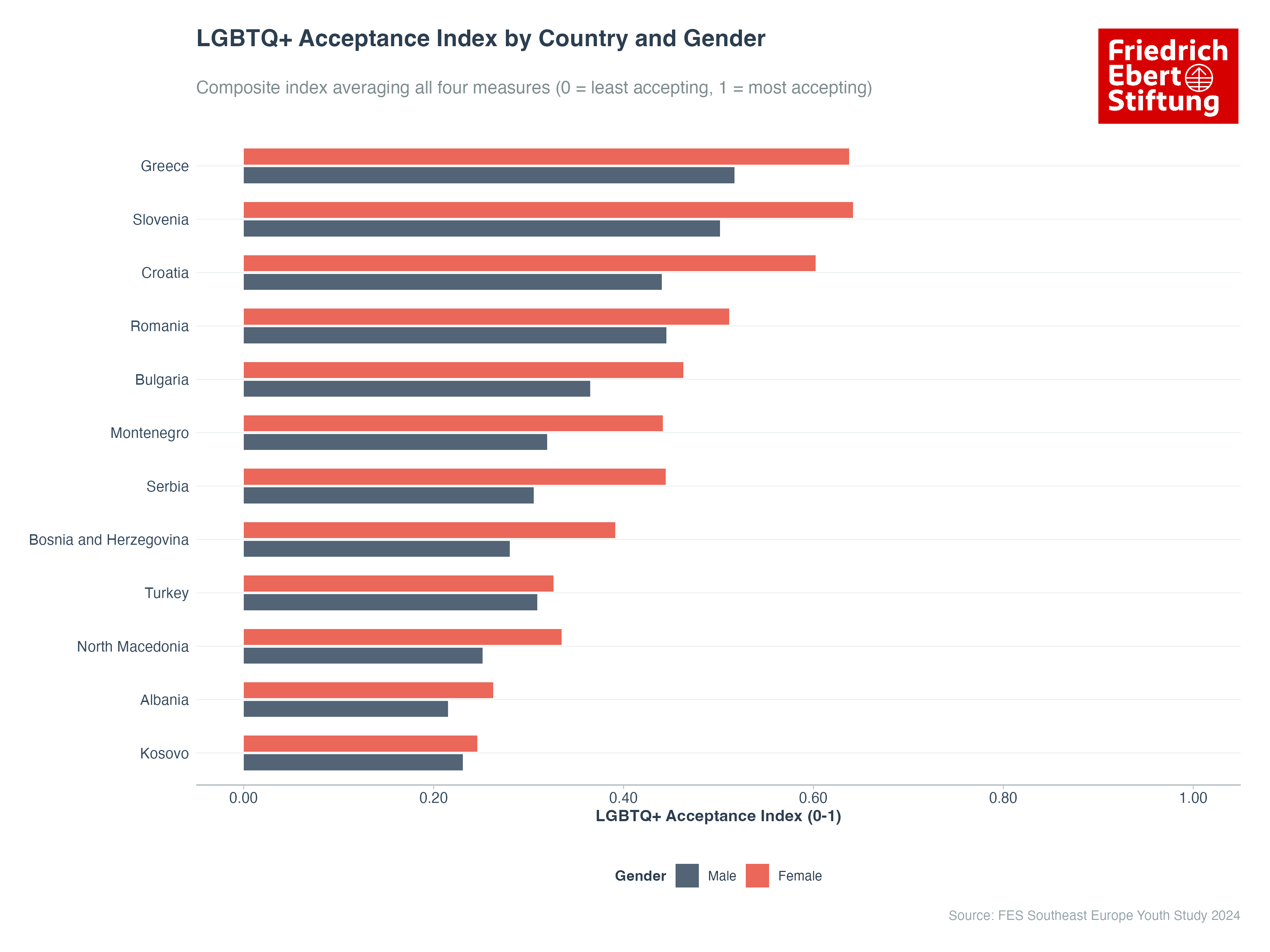
The range is striking. A young Slovenian woman (0.64) scores nearly three times higher on LGBTQ+ acceptance than a young Kosovar man (0.23). The distance between the most and least accepting country—roughly 0.34 points—is more than four times the size of the overall gender gap. Notably, the ordering tracks EU membership — the most accepting countries in the sample are EU members, and the least accepting are not. Where you grow up matters far more than whether you are male or female.
While young women are more accepting than young men in virtually every country, the size of the gender gap varies dramatically. Croatia shows the largest gap (0.16 points), followed by Slovenia (0.14) and Serbia (0.14). Montenegro (0.12), Greece (0.12), and Bosnia and Herzegovina (0.11) also show large gaps. At the other extreme, Kosovo (0.02) and Türkiye (0.02) show no meaningful gender gap at all—the composite index gender gap reaches statistical significance in ten of twelve countries, with only Kosovo (p = 0.47) and Türkiye (p = 0.30) showing non-significant differences.
Putting the Region in Context
How does LGBTQ+ acceptance among Southeast European youth compare to the broader populations of their own countries—and to Western and Northern Europe? Drawing on the Joint European Values Study/World Values Survey (EVS/WVS) 2017–2022, which uses the same "Is homosexuality justified?" question on a 1–10 scale, we can situate the FES Youth Study findings in a wider comparative frame.
The first finding is that young people across Southeast Europe are considerably more accepting than the general population of their own countries. The FES youth average of 4.4 is nearly double the EVS/WVS all-ages regional average of 2.7. The gap is especially large in Romania (5.3 vs 2.3), Bulgaria (4.8 vs 2.5), and Croatia (5.4 vs 3.3)—countries where youth attitudes appear to be ahead of broader societal norms. Even in the least accepting countries, youth scores exceed the all-ages figures, suggesting a generational shift is underway across the region.
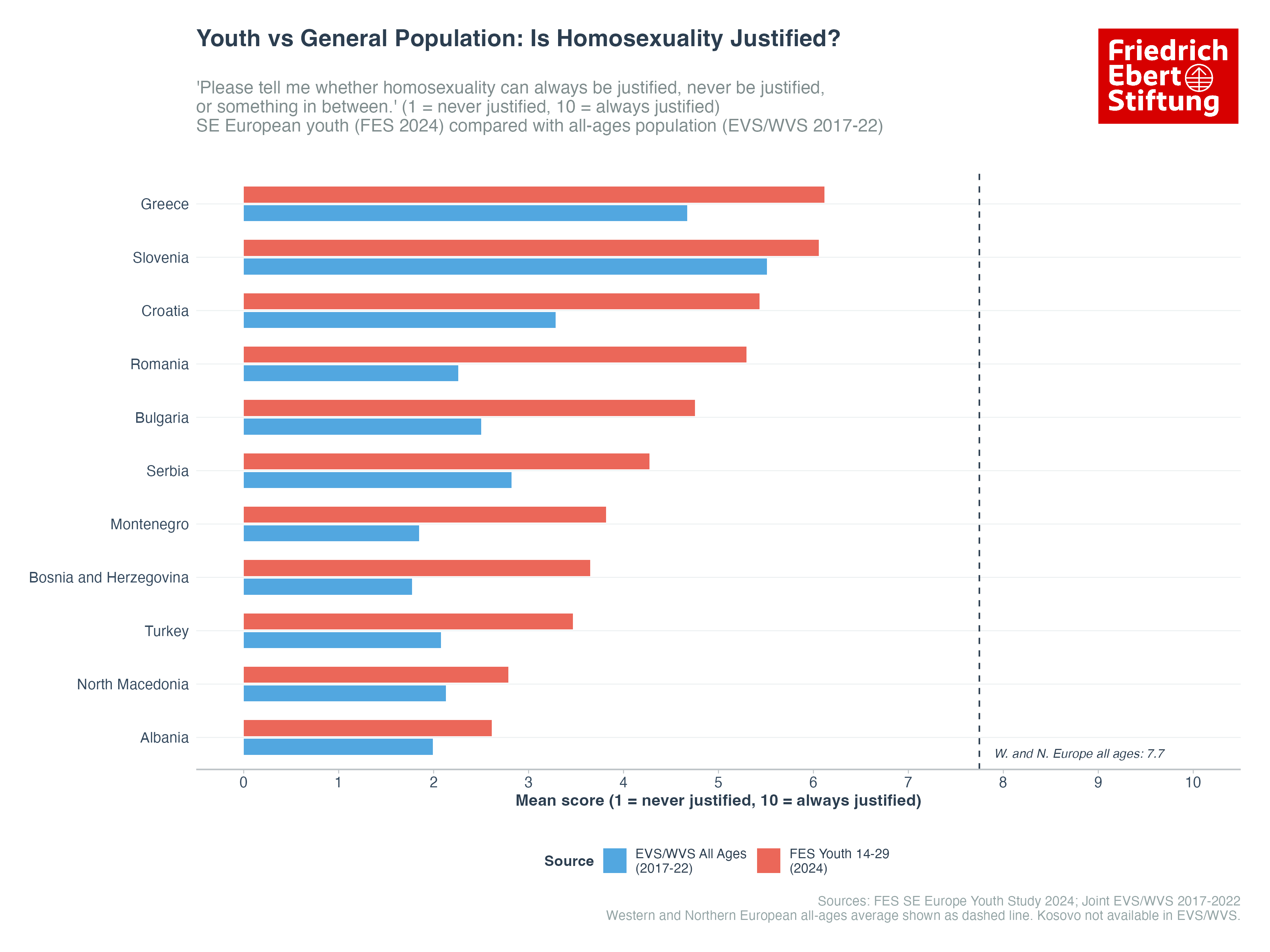
The scale of this divide becomes clearer when Southeast European countries are placed alongside Western and Northern Europe. Using the same EVS/WVS data for all-ages populations, the gap is clear: even the most accepting Southeast European country, Slovenia (5.5), falls below every Western and Northern European country except Portugal (4.8). At the bottom end, Bosnia and Herzegovina, Montenegro, and Albania all score below 2.0—a level no Western and Northern European country comes close to. And the crucial point is this: even Southeast European youth, who as we have just seen are considerably more accepting than their own general populations, would barely break into this ranking. Slovenian and Greek youth, the regional leaders at around 6.0, would sit roughly alongside Italy's all-ages population (6.1)—still below France, Spain, and every country above them.
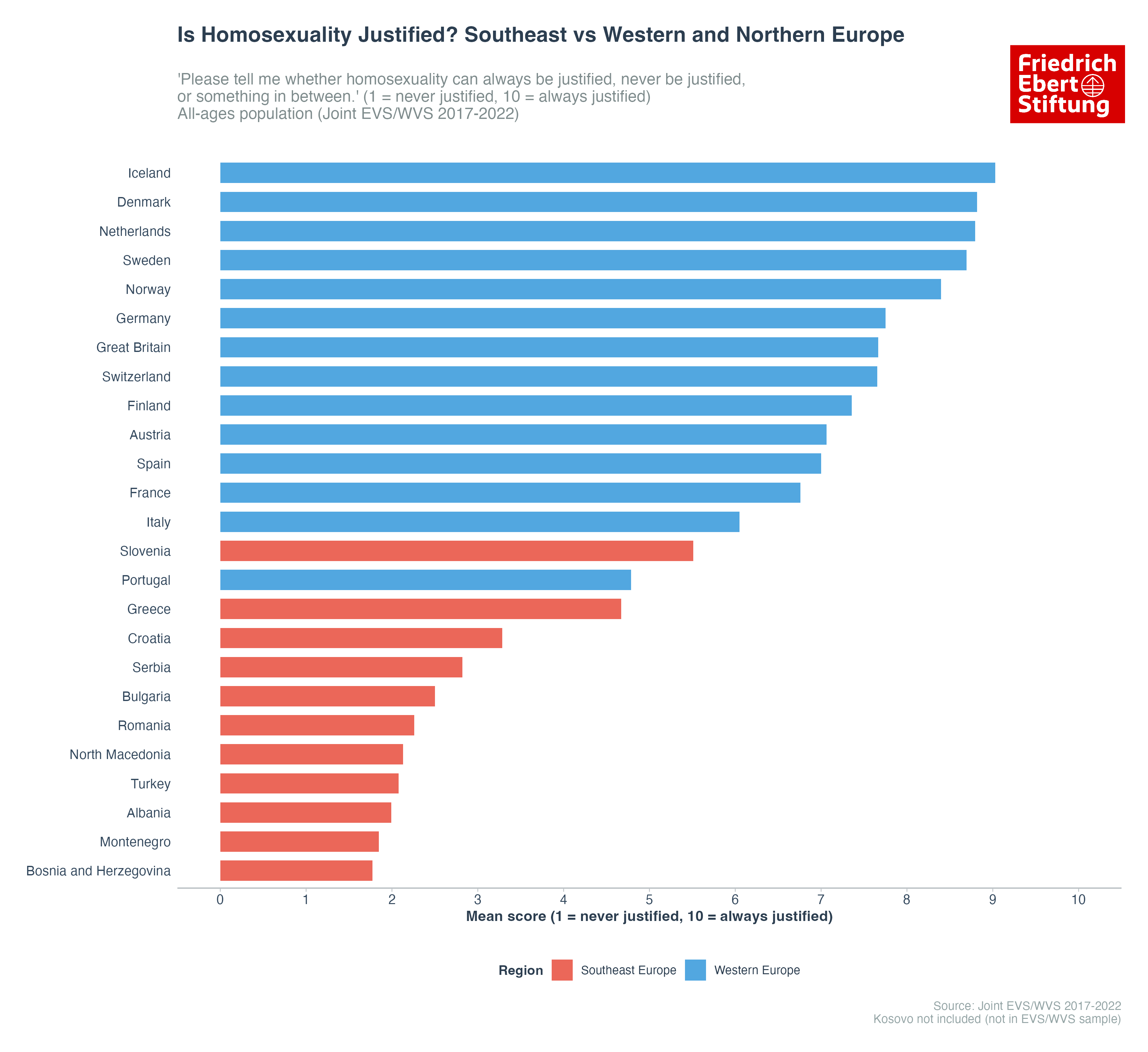
The comparative picture, then, is one of relative increase in LGBTQ+ acceptance within the region alongside a persistent gap with Western and Northern Europe. Southeast European youth are more accepting than the general populations of their own countries, but the distance to Western and Northern European norms remains considerable.
Same-Sex Marriage: Where Support Collapses and Where It Emerges
The same-sex marriage question—the most concrete policy measure in the survey—produces the starkest country contrasts. The question asked respondents whether they agree that same-sex couples should have the right to marry.
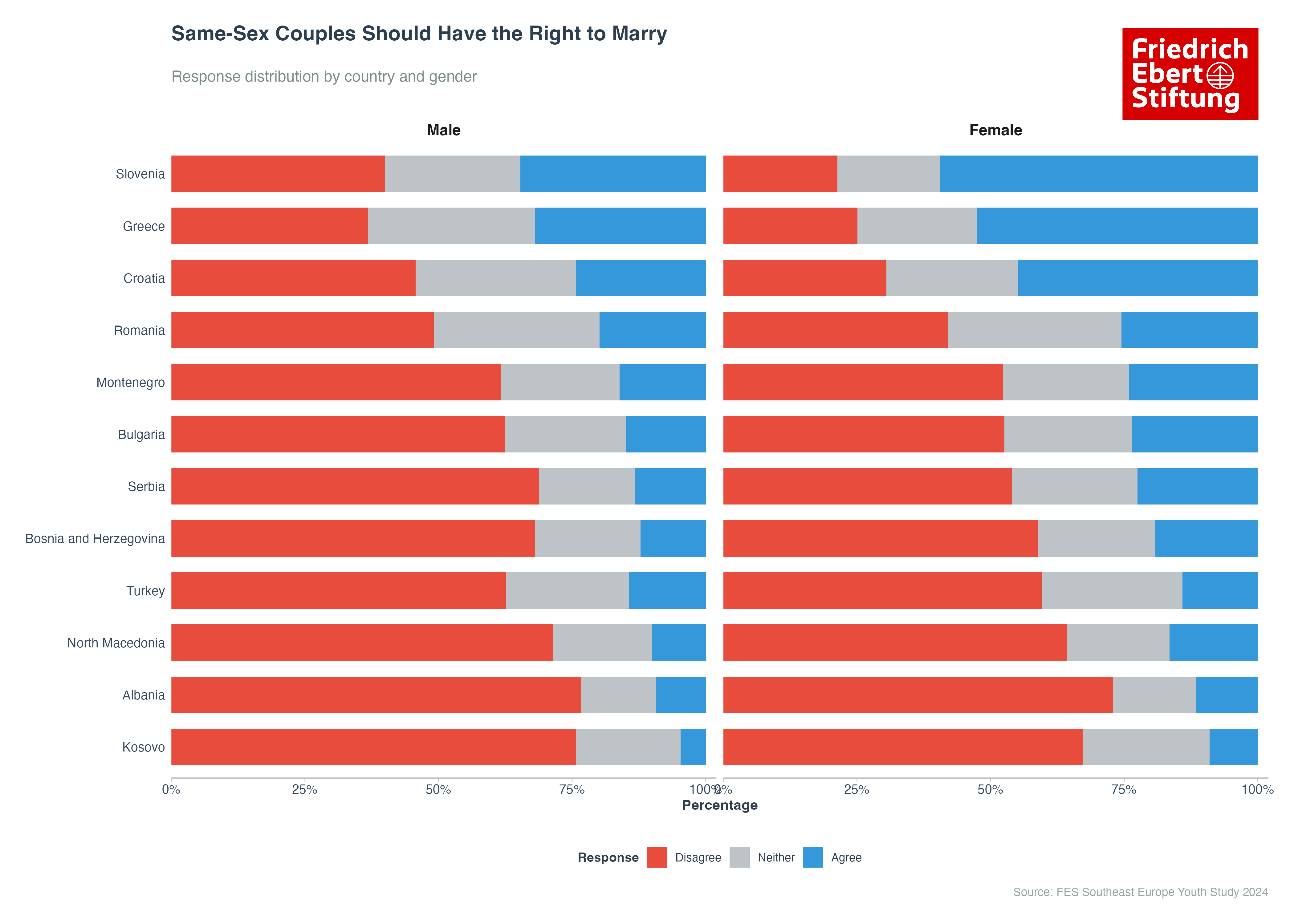
In Slovenia, nearly 60% of young women agree with same-sex marriage rights, compared to 35% of young men—a 25 percentage point gender gap and the highest female support rate in the region. Greece follows closely, with 53% of young women and 32% of young men in agreement. Croatia rounds out the most supportive group, with 45% of young women and 24% of young men agreeing.
At the other end of the spectrum, support collapses. In Kosovo, only 5% of young men and 9% of young women agree. In Albania, the figures are 9% and 12%. Even in countries in the middle of the overall ranking—Serbia, Bulgaria, North Macedonia—agreement rarely exceeds one in four young women and one in six young men.
The "neither agree nor disagree" category captures a substantial share of responses across most countries—typically 20–30%—suggesting that many young people hold uncertain or evolving views on this question. This ambivalent middle may represent the terrain on which future attitudinal change occurs, or hardens.
Outright Rejection: Who Says "Never"?
The homosexuality justification question, which uses a 1–10 scale, allows us to identify those at the extreme end: young people who select 1, meaning homosexuality can "never be justified." This hard-line rejection position offers a different lens from the mean scores, highlighting the floor of tolerance rather than the average.
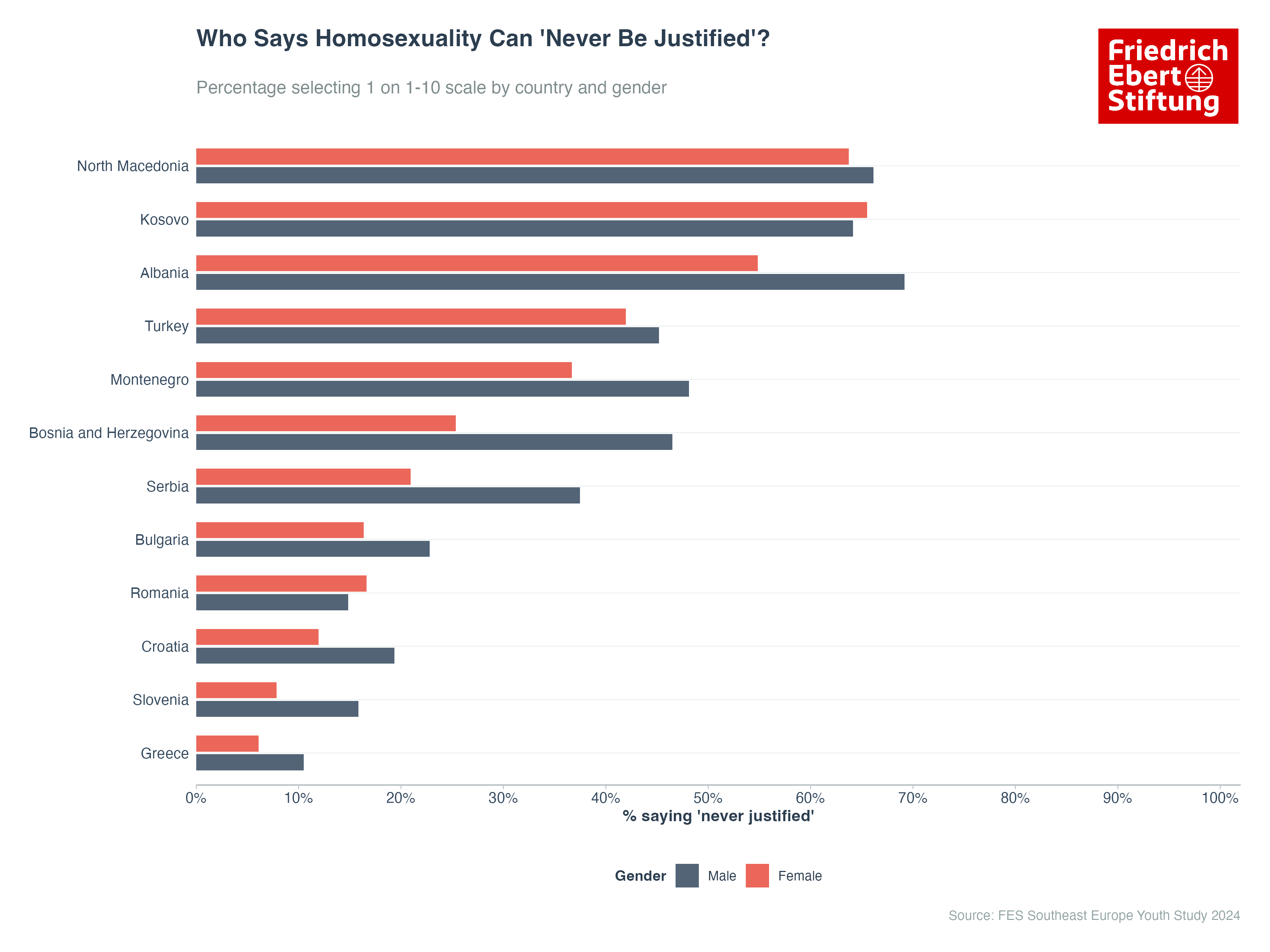
In Kosovo and North Macedonia, roughly two-thirds of both young men and young women select "never justified"—outright majorities of both genders. In these countries, the question is less about a gender divide and more about majority intolerance among the young.
Elsewhere, the gender divide in outright rejection is substantial. In Bosnia and Herzegovina, 47% of young men say "never" compared to 25% of young women—a 21 percentage point gap. Serbia shows a 17-point gap (38% vs 21%), and Albania a 14-point gap (69% vs 55%). Albania is a notable case because while overall rejection is among the highest in the region, a meaningful gender divide persists even at these extreme levels.
At the more tolerant end, Greece has the lowest "never justified" rate: just 11% of young men and 6% of young women. Slovenia (16% and 8%) and Croatia (19% and 12%) also show low rates, indicating that hard-line rejection of homosexuality is a minority position among young people of both genders in these countries—though men remain roughly twice as likely as women to hold this view.
The Religion Factor: Denomination Reshapes the Gender Gap
Religious identity is one of the most important predictors of LGBTQ+ acceptance—and, crucially, it does not affect men and women equally. The interaction between religion type and gender is highly significant (p < 0.001), meaning that the gender gap itself depends on which religious community a young person belongs to.
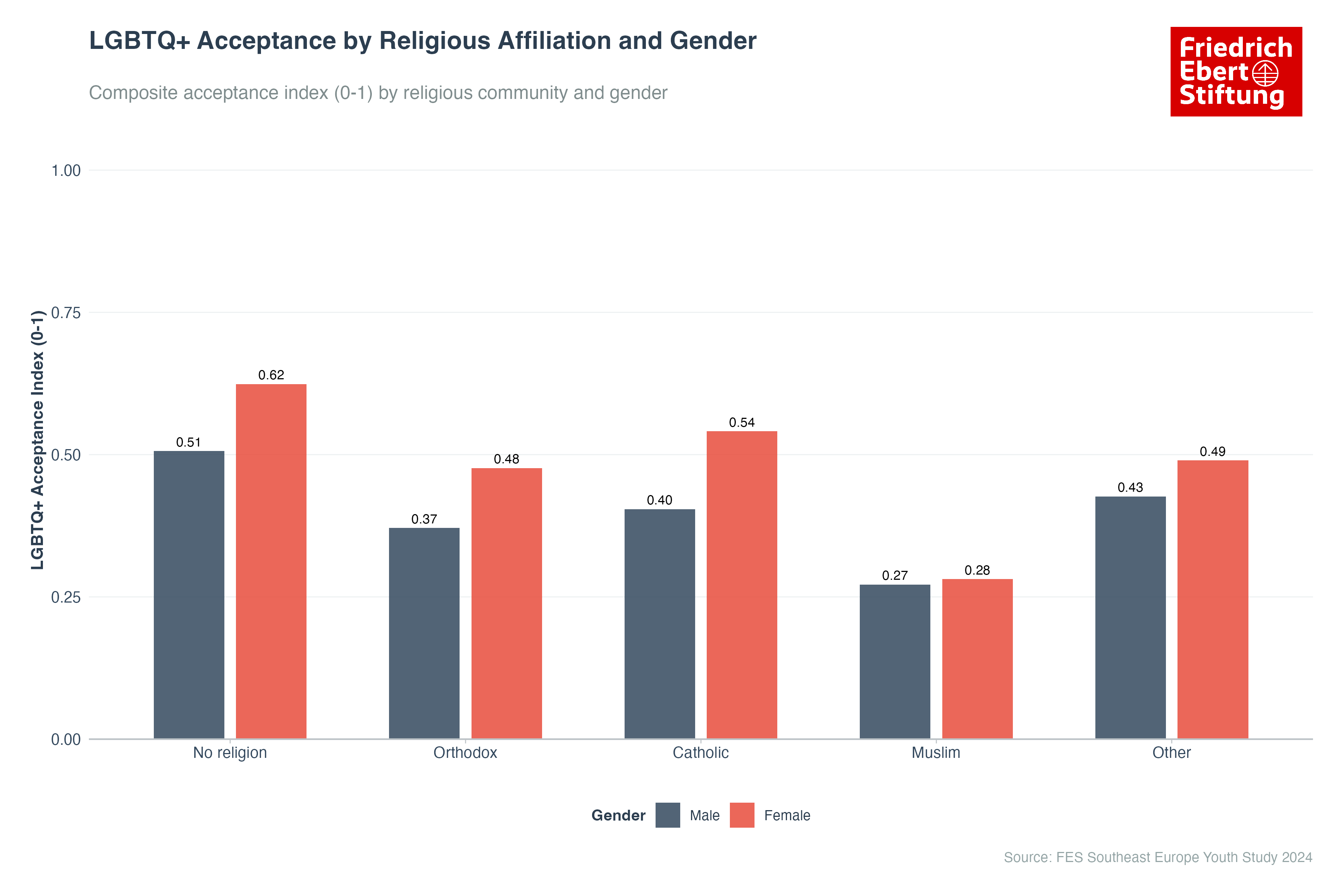
The pattern is clear. Among young people with no religious affiliation, the gender gap is large: non-religious women score 0.62 on the acceptance index while non-religious men score 0.51—a gap of 0.12. Among Orthodox Christians, a similar gap appears: women at 0.48, men at 0.37. Among Catholics, the gap is even larger: women at 0.54, men at 0.40—a difference of 0.14, the widest of any religious group.
Among Muslims, however, the gender gap nearly vanishes. Muslim men score 0.27 and Muslim women 0.28—a difference so small it is substantively meaningless. Muslim women are not only less accepting than non-religious or Christian women (0.28 compared to 0.48–0.62), they are also the only group of women whose acceptance level is essentially indistinguishable from their male counterparts.
Religious participation intensity reinforces these patterns. Among the most religiously active youth, acceptance drops sharply for both genders—highly religious men score 0.27 compared to 0.38 for men who rarely attend, and highly religious women score 0.31 compared to 0.44 for women who rarely attend. The religiosity gradient is the strongest individual-level predictor of LGBTQ+ acceptance after country, and it reaches statistical significance in the full multivariate model even after controlling for all other variables. Unlike denomination, however, participation intensity does not significantly reshape the gender gap: the gap between men and women is broadly similar across levels of religious activity.
When the Gender Gap Appears: An Age Story
One of the most interesting findings concerns age—not because older youth are more or less accepting overall, but because the gender gap itself has a clear developmental trajectory.
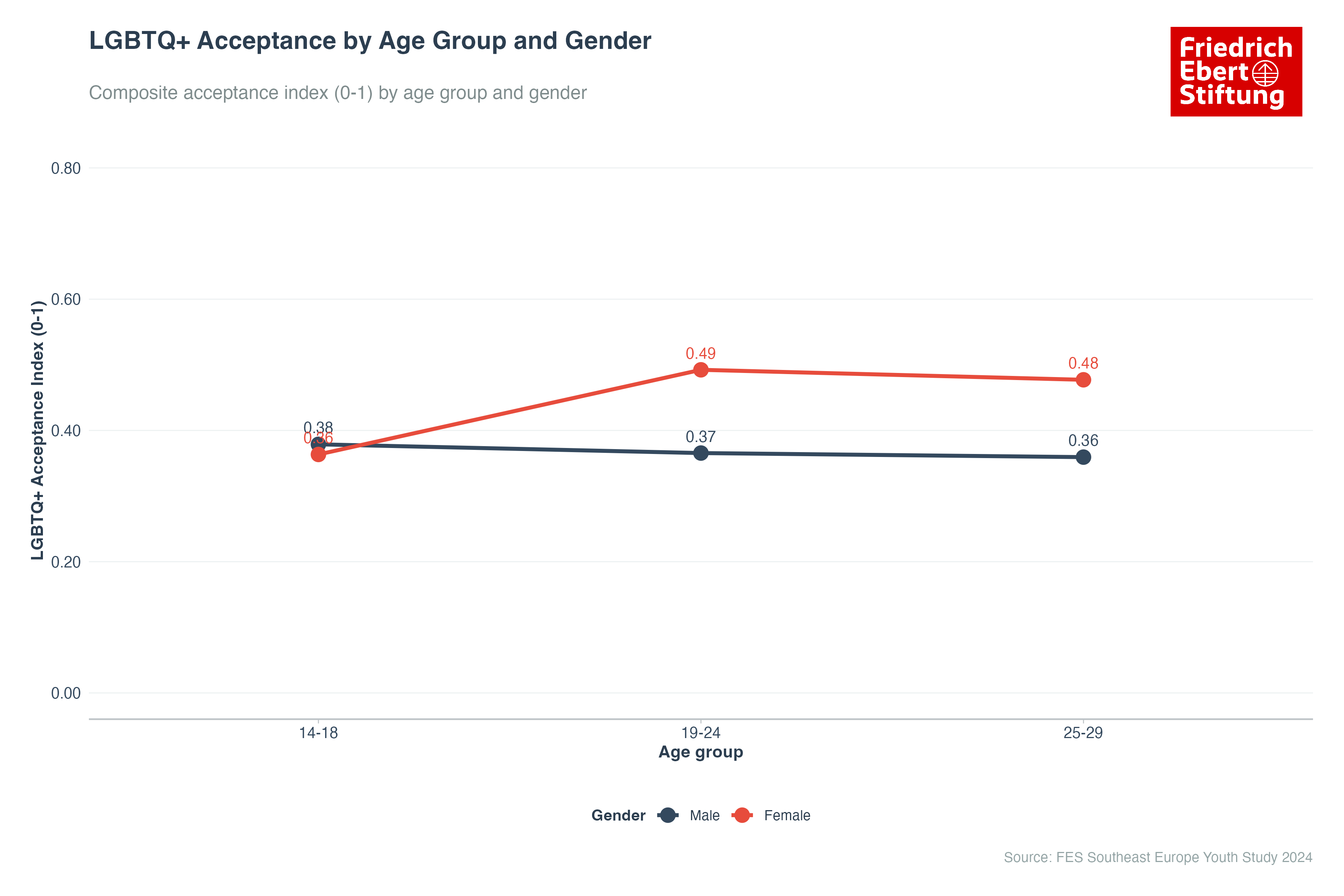
Among 14–18 year olds, the gender gap is essentially zero. Young men (0.38) and young women (0.36) express nearly identical levels of LGBTQ+ acceptance—and if anything, teenage boys are marginally more accepting than teenage girls, though this difference is not statistically significant. At this age, gender has not yet become a meaningful predictor of tolerance.
Between ages 19 and 24, something changes—but only for women. Young women's acceptance jumps sharply, from 0.36 to 0.49—an increase of 0.13 points on the composite index. Young men's acceptance barely moves. By their early twenties, a gender gap that did not exist in adolescence has become a chasm. The gap then holds steady into the 25–29 age group.
The age-by-gender interaction is highly significant (p < 0.001). What drives this divergence? Several mechanisms are plausible. University attendance—which is more common among young women in the region—may expose them to more liberal social norms. Entry into broader social networks, exposure to online discourse, or the experience of navigating gender-related challenges in early adulthood may shift women's perspectives on marginalised groups more broadly.
Ideology: Not What You Might Expect
Political ideology shapes LGBTQ+ acceptance in unexpected ways. The ideology main effect is not statistically significant (p = 0.11)—meaning that, overall, where someone places themselves on the left-right spectrum does not significantly predict their LGBTQ+ acceptance after controlling for country. What is significant is the interaction between ideology and gender (p = 0.001): ideology operates very differently for men and women.
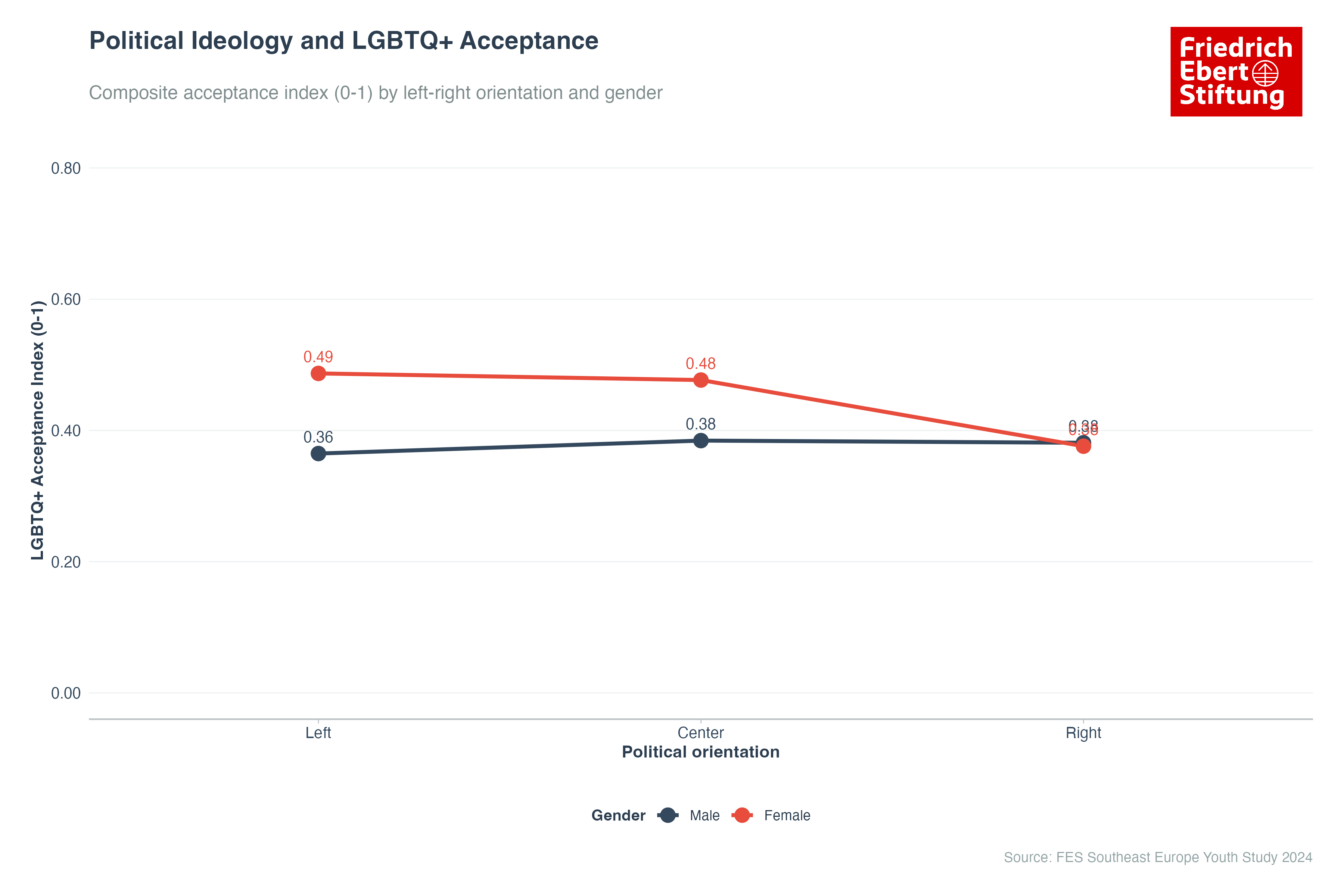
Among women, left-wing (0.49) and centrist (0.48) women score nearly identically, but right-wing women drop sharply to 0.38. The story for women is not a smooth ideological gradient but a right-wing break: conservative identification is associated with substantially lower acceptance, while left and centre are essentially interchangeable.
Among men, the pattern is different. It is an essentially flat line across the political spectrum. For young men in Southeast Europe, political self-placement bears no meaningful relationship to LGBTQ+ attitudes.
The consequence is that the largest gender gap appears on the political left, where women outscore men by 0.12 points—the widest gap across ideological categories. Among right-wing youth, by contrast, men and women converge at nearly identical levels (0.38 for both). Left-wing identification is associated with markedly higher LGBTQ+ acceptance among women but not among men, producing a gender divide that does not exist on the political right.
Geography Matters
Urban residence is associated with higher LGBTQ+ acceptance, as expected—the main effect is statistically significant (p < 0.001). But the gap is modest in magnitude: urban and semi-urban youth of both genders score around 0.38–0.48 on the acceptance index, while rural youth score lower at 0.32 for men and 0.39 for women. The divide is less a smooth gradient than a rural penalty.
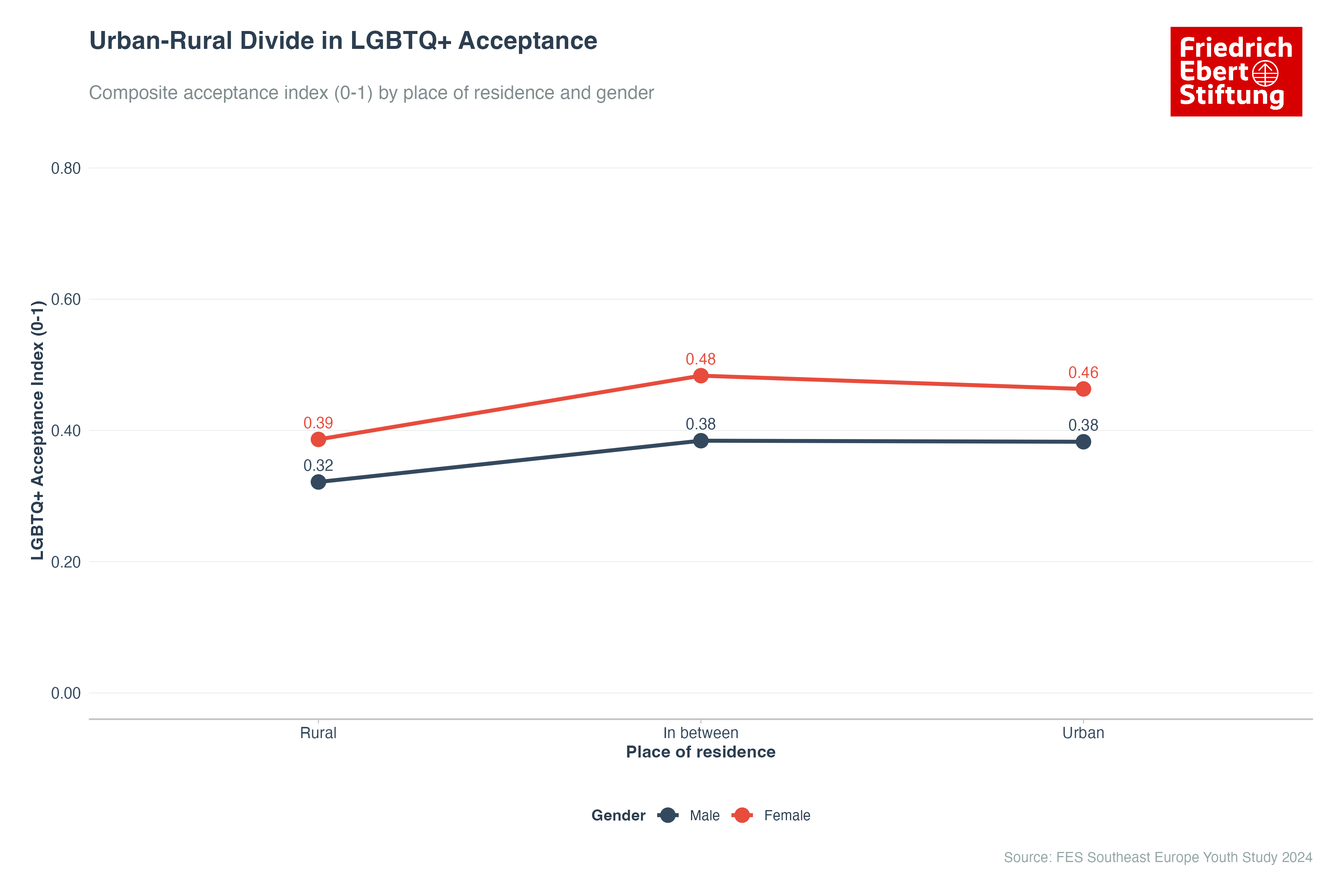
Crucially, the urban-rural gap does not significantly interact with gender (p = 0.46). The gender gap in LGBTQ+ acceptance exists across all geographic settings—rural, semi-urban, and urban alike. If urban exposure were the key mechanism behind women's greater acceptance, we would expect the gender gap to widen in cities, and there is no evidence of this. Whatever drives the gender difference operates independently of whether someone lives in a city or a village.
What the Multivariate Model Reveals
The full statistical model, which simultaneously controls for gender, age, religiosity, urban-rural location, ideology, and country, confirms the hierarchy of individual-level predictors for LGBTQ+ acceptance. The most powerful is religious participation (with highly religious youth scoring 0.13 points lower than the least religious), followed by gender (women score 0.08 points higher, highly significant at p < 0.001), age (19–24 and 25–29 year olds score about 0.05 points higher than 14–18 year olds), urban residence (0.03 points higher than rural), and right-wing ideology (0.03 points lower than left-wing).
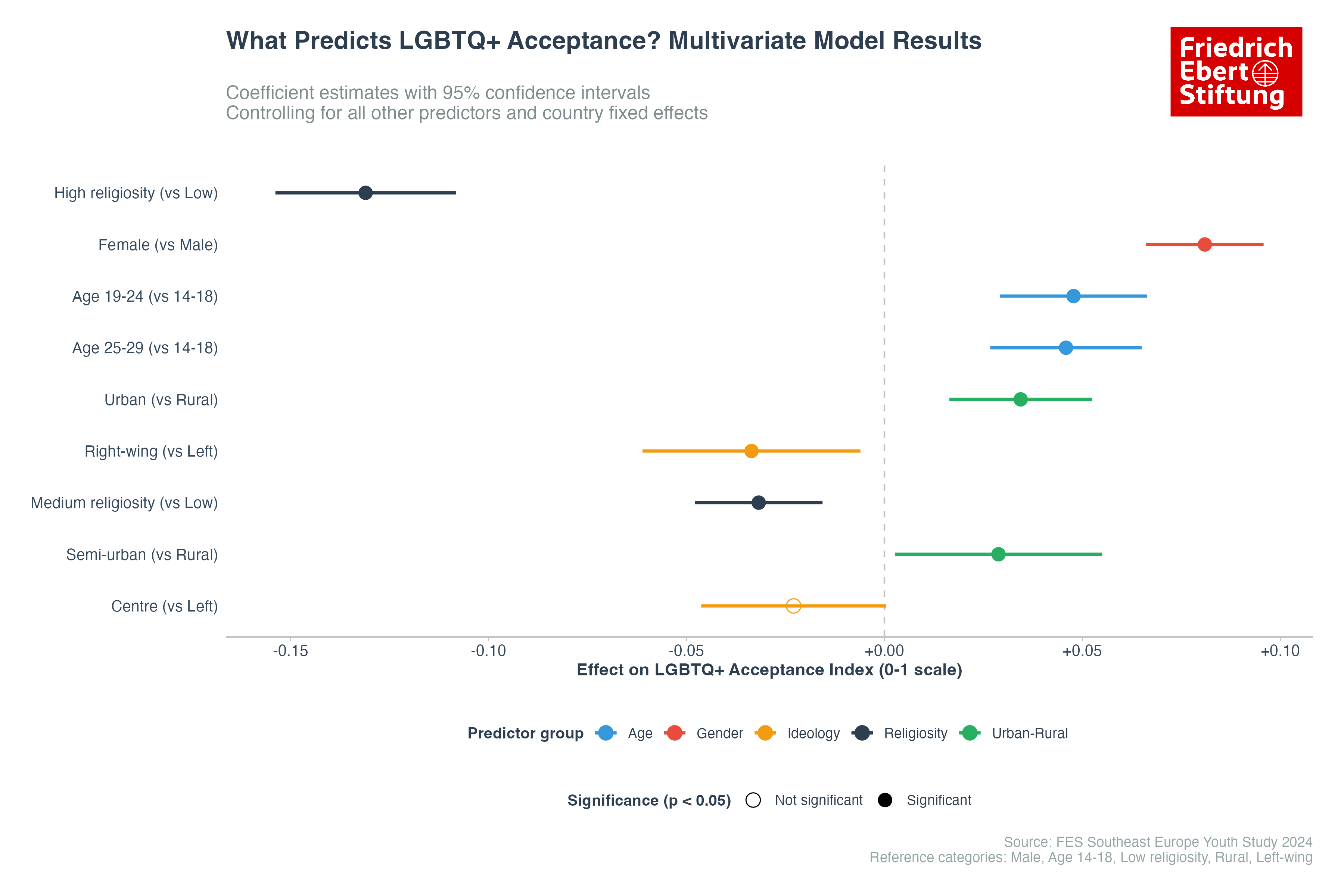
Importantly, the gender effect survives all of these controls intact. Being female is associated with 0.08 points higher LGBTQ+ acceptance even after accounting for religiosity, urban-rural location, age, and political orientation. Gender operates as an independent predictor of greater tolerance—not just a proxy for other characteristics that happen to differ between men and women.
What Explains the Gender Gap?
Several mechanisms may help explain why young women are consistently more accepting of LGBTQ+ identities and rights than young men across most of the region:
Shared experience of marginalisation: Young women who have experienced gender-based discrimination or constraints may develop greater empathy for other marginalised groups. Previous instalments in this series have documented that young women across Southeast Europe are substantially more likely than men to perceive rights deficits and to support expanding minority rights—a pattern consistent with broader solidarity among those who experience structural disadvantage.
Masculinity norms: Opposition to homosexuality is often closely linked to traditional constructions of masculinity. For young men, expressing tolerance toward LGBTQ+ identities may carry social costs within male peer groups, where heteronormative attitudes serve as markers of masculine identity. The fact that the gender gap is smallest in the most conservative contexts—where social pressure against LGBTQ+ acceptance is strongest for both genders—is consistent with this interpretation.
Differential socialisation through education: Young women in Southeast Europe are more likely to attend university and to rate education as a life priority. Higher education has been consistently associated with more liberal social attitudes across European studies, and the earlier and steeper increase in women's acceptance between ages 18 and 24 is consistent with an educational pathway.
Exposure to feminist and rights discourse: Online and social media spaces have created transnational communities where feminist, LGBTQ+, and broader human rights discourses intersect. Young women may be disproportionately exposed to these spaces and discourses, which frame LGBTQ+ rights as part of a broader gender equality agenda.
Implications
Country context is destiny—almost. The overwhelming dominance of country effects in shaping LGBTQ+ attitudes means that regional approaches to promoting tolerance are likely to be far less effective than country-specific strategies. The attitudinal landscape in Greece bears almost no resemblance to that of Kosovo, and interventions appropriate for one context may be irrelevant or counterproductive in another.
The age pattern offers cautious hope. The emergence of the gender gap in early adulthood—driven primarily by women's acceptance rising while men's stays flat—suggests that something in the transition from adolescence to adulthood opens young women to greater tolerance. If this mechanism can be identified and supported, it might be possible to create conditions that produce similar shifts among young men. Conversely, the flatness of men's acceptance across age groups suggests that male attitudes may be set earlier and prove more resistant to change through natural life-course development.
Left-wing identification is not sufficient. The finding that left-wing men in Southeast Europe show no higher LGBTQ+ acceptance than centrist or right-wing men challenges assumptions that progressive political identity naturally encompasses tolerance on sexuality issues. In this region, economic and political progressivism do not automatically translate into social progressivism—at least not for men. Advocacy strategies that assume left-wing audiences are already sympathetic may overlook the need for explicit engagement on LGBTQ+ issues within progressive male networks.
Conclusion
LGBTQ+ acceptance among Southeast European youth is shaped primarily by country context and religious identity, with gender providing a consistent but secondary influence. Young women are more accepting than young men across nearly all settings—but this gap varies from large to nonexistent depending on where someone lives, what they believe, and how old they are.
The most important finding may be what the data says about the limits of the gender gap. In Kosovo and Türkiye, it barely exists—because cultural context is so dominant that gender cannot generate independent variation. Among Muslim youth, it disappears—because religious community identity overrides gender as a predictor. Among teenagers, it has not yet formed—because whatever produces the gap requires the experiences and exposures of early adulthood. And among right-wing youth, it collapses—because conservative ideology pulls women's attitudes down toward men's baseline.
The gender gap in LGBTQ+ acceptance, in other words, is not a universal feature of male and female psychology. It is a product of specific conditions: sufficient social space for attitudes to vary, exposure to liberalising influences that reach women more than men, and a cultural environment that does not suppress individual variation entirely. Where these conditions exist—in the more pluralistic, secular, and urbanised corners of Southeast Europe—the gap is large and meaningful. Where they do not, gender and sexuality attitudes are shaped by forces more powerful than gender itself.
For the region's future, this means that the trajectory of LGBTQ+ acceptance will depend less on whether young women continue to become more accepting—the data suggests they will—and more on whether the conditions that produce attitudinal change can extend their reach to young men, to more conservative communities, and to the countries where tolerance remains the exception rather than the emerging norm.
About the Data
This analysis draws from the Friedrich Ebert Stiftung's Southeast Europe Youth Study 2024, examining attitudes among 8,943 young people aged 14–29 across Albania, Bosnia and Herzegovina, Bulgaria, Croatia, Kosovo, North Macedonia, Montenegro, Romania, Serbia, Slovenia, Greece, and Türkiye. Comparative data is drawn from the Joint European Values Study/World Values Survey 2017–2022.
Related publication

Hasanović, Jasmin ; Lavrič, Miran ; Adilović, Emina ; Stanojević, Dragan
Youth study Southeast Europe 2024
independent but concerned: the voices of young people in Southeast Europe
See the full list of youth study publications